
This article explains the rules for forming and ranking poker hands in Texas Hold'em. These are the fundamental rules of the game.
- In Texas Hold'em, a hand always consists of exactly five cards.
- Hands are ranked by strength. The player with the strongest hand wins the pot.
- A hand is formed using a combination of the five community cards and the player's two private cards (hole cards). From these seven cards, the player chooses the five cards that make the strongest possible hand.
- The strength of a hand is determined first by its rank (listed below). If the ranks are the same, the hand is compared by the rank of the individual cards (see details in each hand's description).
Example: If Player 1 has a Straight and Player 2 has Two Pair, Player 1 wins because the rank of a Straight is higher. The card ranks are not compared in this case.
- If two or more players have hands of the same rank, the winner is determined by comparing the card ranks that make up the hand. If those are also identical, the hands are considered equal, and the players split the pot.
- Some hands include kickers — cards that are not part of the main hand combination but are used to break ties. You can read more about kickers in the dedicated Kicker article.
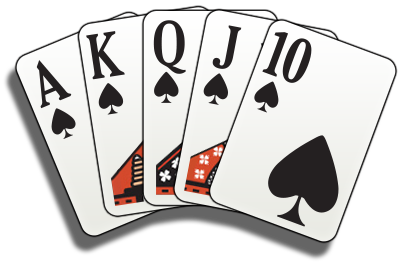
Royal Flush
- A, K, Q, J, 10 of the same suit.
- This is the highest and rarest possible hand. On average, a Royal Flush appears once in 30,939 hands.
- If a Royal Flush is on the board using all five community cards, all active players split the pot.
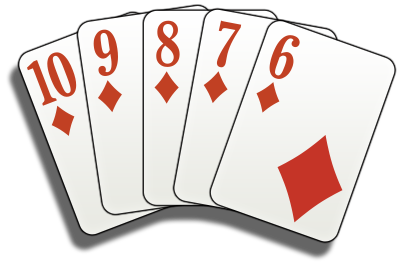
Straight Flush
- Five consecutive cards of the same suit.
- An Ace can be used as the low card (A, 2, 3, 4, 5) or the high card (10, J, Q, K, A). The A, 2, 3, 4, 5 Straight Flush is the lowest.
- Strength is determined by the highest card in the sequence. For example, a King-high Straight Flush beats an Eight-high Straight Flush.
- In a single hand, a Straight Flush can only be made in one suit. If two players have a Straight Flush, the one with the higher top card wins.
- If a Straight Flush is on the board, the pot is split unless a player's hole card creates a higher Straight Flush (e.g., using a sixth card of the same suit in sequence).
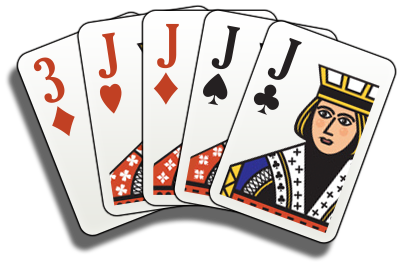
Four of a Kind (Quads)
- Four cards of the same rank.
- Strength is determined by the rank of the four cards.
- If the four cards are the same (using community cards), the winner is determined by the kicker (the highest fifth card). If kickers are also identical, players split the pot.
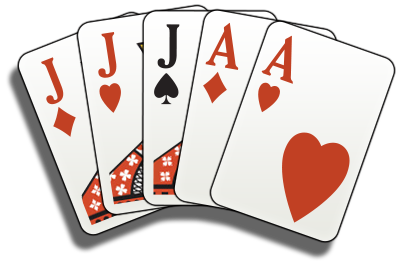
Full House
- Three cards of one rank and two cards of another rank.
- The strength of a Full House is determined first by the rank of the three cards (the "trips"), then by the rank of the pair.
- If the "trips" are the same, the pairs are compared. If both are identical, players split the pot.
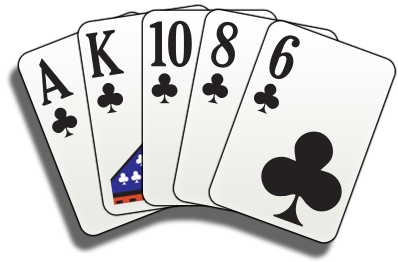
Flush
- Any five cards of the same suit, not in sequence.
- In a single hand, a Flush can only be made in one suit.
- If multiple players have a Flush, the winner is the player with the highest card in the flush. If the highest cards are equal, the second, third, fourth, and fifth cards are compared. If all five cards are of the same rank (using community cards), players split the pot.
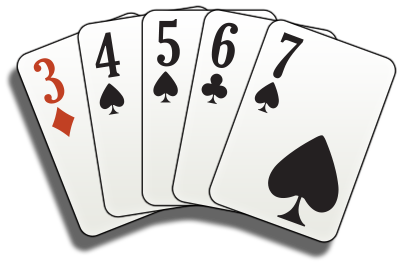
Straight
- Five consecutive cards of mixed suits.
- An Ace can be used as low (A, 2, 3, 4, 5) or high (10, J, Q, K, A). The A, 2, 3, 4, 5 Straight is the lowest.
- The strength of a Straight is determined by its highest card. If the highest card is the same, players split the pot.
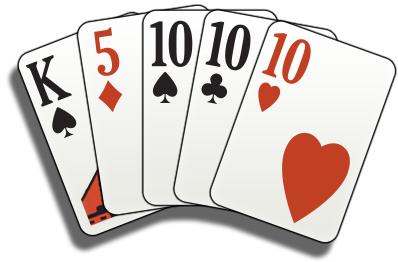
Three of a Kind (Set/Trips)
- Three cards of the same rank.
- First, the rank of the three cards is compared.
- If equal, the hand is decided by the kickers (a Three of a Kind uses two kickers). Kickers are compared one by one from highest to lowest.
- If both the set and all kickers are identical, players split the pot.
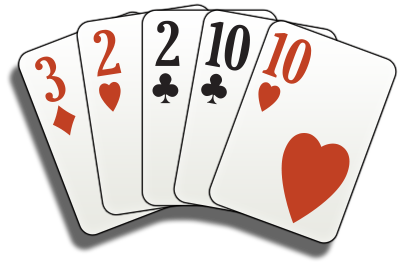
Two Pair
- Two different pairs of cards of the same rank.
- Hands are compared first by the rank of the higher pair, then by the rank of the lower pair.
- If both pairs are identical, the winner is determined by the kicker (the fifth card). If the kicker is also the same, players split the pot.
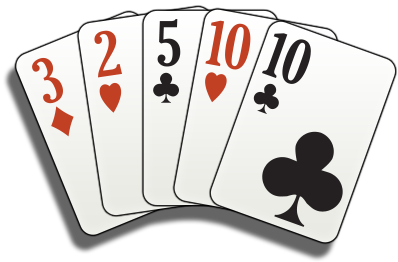
One Pair
- Two cards of the same rank.
- A One Pair hand consists of the pair and three kickers.
- Strength is determined first by the rank of the pair, then by the three kickers in descending order.
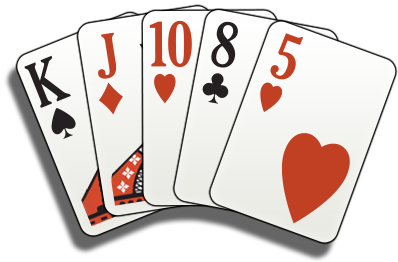
High Card
- The lowest possible hand. It contains no pairs or combinations; it is simply the player's five highest cards.
- Hands are compared by the highest card. If those are equal, the second, third, fourth, and fifth cards are compared successively.